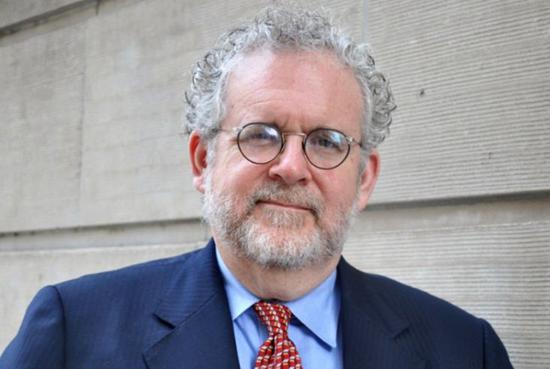
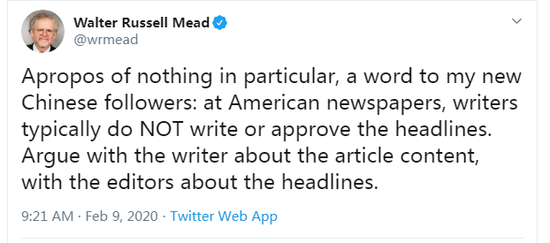
公开资料显示,他是美国保守派外交学者、巴德学院教授。米德不仅是《华尔街日报》的专栏作者,还是《美国利益》杂志的总编辑,老本行是外交战略政策研究。 针对报道辱华的行为,米德不仅没有采取正确的行动,还甩锅给编辑。 他在社交媒体上发文称,“文章内容有问题可找作者,但若标题有争议,烦请去找编辑理论。”
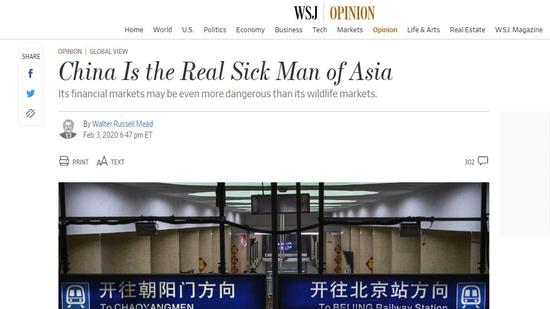
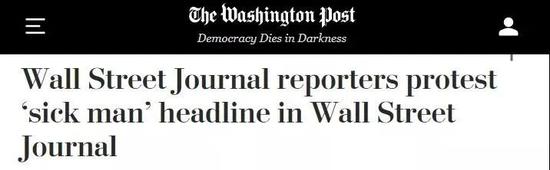
The writer, Walter Russel Mead didn‘t take up his responsibility, but left it to the editor。 “Apropos of nothing in particular, a word to my new Chinese followers: at American newspapers, writers typically do NOT write or approve the headlines。 Argue with the writer about the article content, with the editors about the headlines,” Mead said on his twitter。 这种不负责任的解释显然没有任何逻辑可言,连《华尔街日报》自己的员工都看不下去了。 他们在信中写道:“我们认为,‘冒犯行为不是故意的’这一说法并不令人信服——应该有人知道,这样做会引起广泛的被冒犯感。如果他们不知道,那么他们犯了一个严重的错误,应该改正并道歉。” This irresponsible explanation clearly lacks any logic。 “We find the argument that no offense was intended to be unconvincing: Someone should have known that it would cause widespread offense。 If they didn‘t know that, they made a bad mistake, and should correct it and apologize,” wrote the email。 任何读过中国历史的人都应该知道“东亚病夫”这个词,这个充满西方殖民色彩的专有名词,清晰地折射出了具有种族主义色彩的优越感。 “东亚病夫”是什么内涵?不仅中国人十分清楚,作为学者的米德也应该心知肚明。即便米德不知道,见多识广的《华尔街日报》编辑们难道也不知道吗? As anyone who has read history about China should know, this particular appellation was used by the western invaders during their colonial rule, which was clearly a racist phrase。 It is not only the Chinese who would feel offended by the phrase “sick man of Asia,” a responsible journalist should also be aware of the inappropriate wording in this historical context。
| 


 发表于 2020-2-24 22:23

 显身卡
显身卡